




 EN
EN


Mobile Legends: Bang Bang



Written by
At first glance, Mobile Legends: Bang Bang is simple to follow. Matches are short, action-packed, and visually clear. Even a casual viewer can tell who won a fight or secured an objective. But once you start watching more closely — especially competitive games — that surface clarity disappears. Two teams may look evenly matched, yet one consistently controls the tempo. A draft that seems risky suddenly dominates. A series swings not because of mechanics, but because of decisions made five minutes earlier.
This is the moment when watching turns into analysis. And it’s also when many fans realize that following MLBB matches properly requires more than streams and highlights.
One match can be misleading.
A clean win might hide drafting mistakes.
A close loss may actually signal strategic superiority.
Mobile Legends is a game of patterns. Teams repeat habits. Regions develop preferences. Certain strategies only work under very specific conditions. When matches are viewed in isolation, these patterns are invisible. The result is emotional reactions instead of understanding: “this team choked,” “that hero is broken,” “the patch ruined everything.”
In reality, most competitive outcomes are far more predictable when seen as part of a larger sequence.
At a competitive level, matches are not just games — they are data points. Each one adds information about:
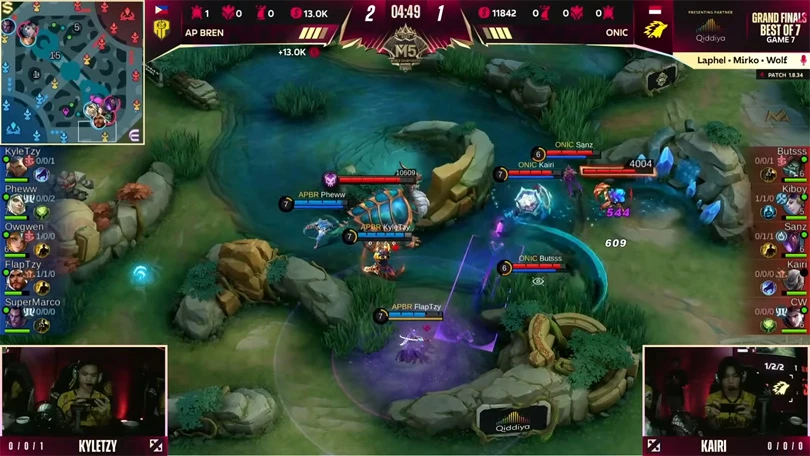
This is where the idea of tracking mlbb matches becomes meaningful. Not as a list of scores, but as a structured record of how the game is played at the highest level.
The difference between casual viewing and informed viewing is context. And context only exists when matches are connected.
Most match listings focus on immediacy:
That’s useful, but shallow. What’s often missing is continuity. You can see results, but not trajectories. You know who won, but not how that win fits into a team’s broader performance.
Without historical structure, matches become disposable. Watched once, forgotten the next day.
Competitive MLBB becomes truly interesting when matches are organized into narratives:
Seeing these narratives requires more than a schedule. It requires a platform that treats matches as part of an evolving scene, not isolated events.
This is where bo3.gg quietly becomes relevant.
Rather than pushing matches as standalone content, bo3.gg frames them within a competitive ecosystem. Matches are tied to:
This approach changes how results are interpreted. A loss isn’t just a loss — it’s part of a pattern. A win isn’t just momentum — it’s evidence.
For viewers who want to understand why things happen, not just what happened, this structure matters.
You don’t need to be a coach or analyst to benefit from structured match data. Even casual fans gain clarity:
When you understand context, matches become more engaging. You stop reacting to moments and start anticipating them.
That anticipation is what separates spectatorship from insight.
One of the most overlooked aspects of MLBB viewing is retrospective analysis. Many of the best lessons come not from live games, but from looking back:
bo3.gg enables this kind of backward navigation. You can trace outcomes, compare performances, and see how today’s results are connected to decisions made weeks earlier.
This is especially valuable in a game where metas don’t flip overnight, but shift gradually through competitive pressure.
Importantly, bo3.gg does not present match data as absolute truth. There’s no claim that numbers alone explain everything. MLBB remains a game of human decisions, form, and adaptation.
What structured match data does provide is grounding. It limits overreaction. It replaces speculation with reference points.
That restraint makes the platform useful, not just impressive.
Mobile Legends: Bang Bang is at its best when watched with understanding. Matches are not isolated spectacles — they are chapters in an ongoing competitive story.
Platforms like bo3.gg don’t try to tell that story for you. They simply give you the structure to read it yourself.
And once you start watching MLBB this way, going back to surface-level viewing becomes almost impossible.
Follow us on our social networks to stay on top of mobile gaming news wherever you are!



In Mobile Legends, there is a lot to choose from when it comes to selecting your hero. There are over a hundred to choose from, and this wide choice makes the g...
Meet Cyclops, one of the strongest Mages in Mobile Legends. Despite his adorable appearance, this dwarfed giant is a deadly DPS Mage that can force enemies to r...

Mobile Legends: Bang Bang offers players an impressive array of skins, heroes, emotes, and more. Acquiring these items is possible by spending the in-game...

Freya, the Valkyrie, is one of the strongest fighters in Mobile Legends. She is also the only hero in MLBB that can be purchased using Diamonds. That alone shou...

Here you can find all the Mobile Legends: Bang Bang (MLBB) codes. As a reminder, even though the name code might suggest a cheating system, it's nothing of the...

Playing Mobile Legends on your PC has many advantages for enjoying this MOBA. You don't have to worry about your phone battery overheating or running out of pow...