



 EN
EN

Written by
Published on

Written by
As you know, here at Mobi.gg we're passionate about mobile games, and we've even created a dedicated media section! However, we also know that, just like everywhere else on the Internet, mobile games are also subject to threats. In this dossier, we take a look at the cyberthreats to mobile games, and how you can protect yourself against them.
Before we look at cyber attacks on mobile games players, it's important to understand why this sector is subject to such attacks. As we shall see, it's a particularly lucrative market, generating billions every year. It is also a sector where a large proportion of users and consumers are young, sometimes very young, and therefore susceptible to influence.
According to a report by analysis firm NewZoo, by the end of 2025, the mobile gaming sector will be worth more than 103 billion dollars, with 3.6 billion players located primarily in developing countries such as Africa, India and Latin America.
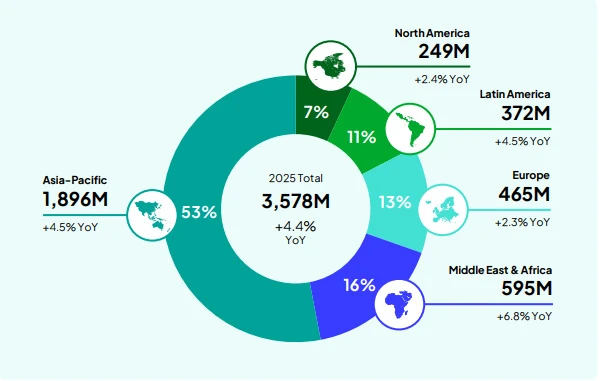
What's more, the games most popular with gamers are free-to-play titles with in-game purchases, the famous microtransactions. Given these incredibly high figures, it's easy to see why the mobile gaming sector is targeted by cyber attacks. But that's not all!
While, according to Business App, the average age of mobile games players is between 18 and 24, we must not overlook the large proportion of young people, and even children, who play on their smartphones. As shown by the AFJV and GamesIndustry.biz, in 2013, 63% of 12-17 year-olds spent an average of 7 hours a week playing mobile games. The impressionable nature of this young audience, combined with their lack of awareness of the dangers of cyber attacks, makes them a perfect target for cybercriminals.
Now that we know why mobile gaming is a favoured sector for online criminals, let's take a look at the main threats. Data theft, malware, scams - beware of suspicious practices!
Data theft is indeed the main threat lurking inside your smartphone. Why should this be? Quite simply because, on the Internet, your data is very expensive and is used for promotional purposes, among other things.
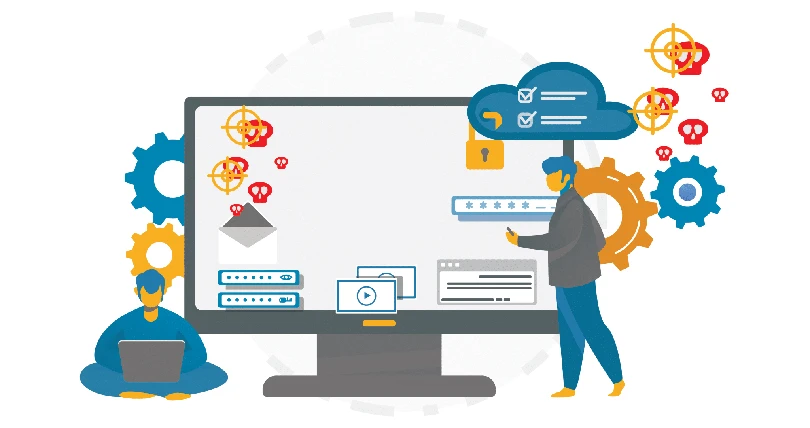
Cybercriminals are professionals at stealing data, which they then sell on. Let's take a look at how this can happen via your mobile games.
Behind this unthreatening term lies a fraudulent method of stealing your login details, your personal data or, worse still, your bank codes. How does it work? First, cybercriminals identify their victims and try to contact them, often by email, posing as the developers of a mobile game. You may already have seen these emails, and you may have interpreted them as phishing. You wouldn't be wrong!
The cybercriminals claim to be offering a tempting reward in exchange for the player's login details or other personal data.
Let's take the example of Tap Busters: Bounty Hunters, an idle RPG with over 45,000 reviews on the Google Play Store when it was still downloadable. It turns out that the game's developers, Tilting Point, had overlooked a major security flaw. As a result, millions of pieces of sensitive data were available at any one time via the database stored on Google's cloud, Firebase.
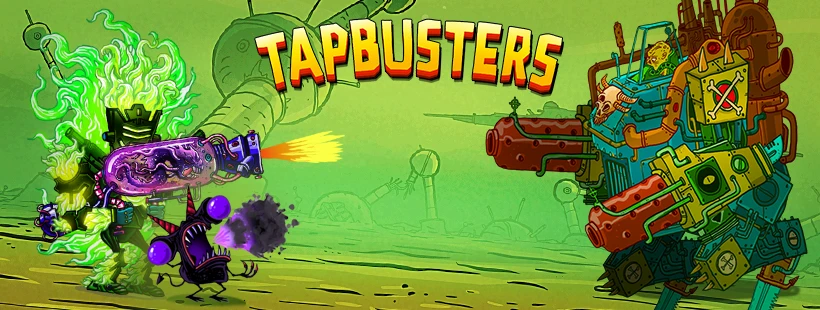
A security flaw like this can lead to cyber attacks on your mobile games, without you even realising it!
As you can see, not all mobile games are secure and reliable. Need further proof? Some mobile games are actually malicious apps, developed by cybercriminals to steal your personal or banking data, or inject malware into your device to gain access to your smartphone. And you wouldn't even know it, because these fraudulent mobile games look just like any other app!
Malicious apps are generally offered on secondary app stores, outside the App Store and Play Store, but also via phishing (which we mentioned earlier), or on classic app stores, although this is rarer.
If you play games that include resources that can be bought for real money (the microtransaction free-to-play games we mentioned earlier), then you may be aware that third-party sites exist, offering you obscure ways of getting unlimited access to these resources for free. We strongly advise against using these platforms, for several reasons. The first is quite simply that there is no solution for obtaining unlimited free resources. The second concerns the malicious nature of these platforms, through which cybercriminals can easily recover your login details.
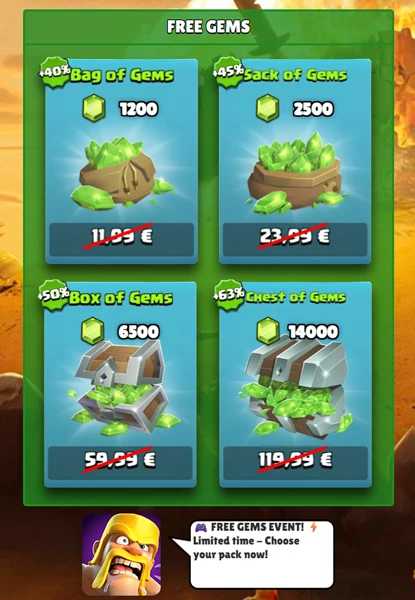
To get free and reliable resources, head for our links and gift codes. The ones we offer are reliable, free and come directly from the developers, via their social networks in particular.
When it comes to cyber-attacks on mobile games, we could also have mentioned the theft of your login details using brute force, as well as attacks on unsecured public networks, where hackers can happily make use of your personal data and login details.
We've taken a look at the biggest cyber threats to mobile games. But how can you protect yourself? Here are a few tips that might help:
Now you know about the various cyber attacks on your mobile games and how to avoid them. As usual, when you're on the Internet, you need to be wary and learn about the threats out there. And if you're the parents of little gamers, data theft or pirate access to their smartphone shouldn't be your only concern. There are plenty of predators out there, especially on the games that young people like to play, such as Roblox. So be vigilant!
Follow us on our social networks to stay on top of mobile gaming news wherever you are!


As you know, on the Internet you have to be wary of everything, including hackers. Steam understands this, which is why the platform offers you double authentic...
Is it possible to combine business with pleasure, with a business phone designed for gaming? In this guide, I'll be giving you advice on how to choose your next...

AI is taking an increasingly dominant position in the gaming world, enabling pipeline tools, filling virtual spaces with content and highlighting data for busin...

There's nothing like the ultimate duel to prove your worth. And it's d-d-d-duel time for players, as the only refund option allowed by the game's developer is t...

Evolution is a fundamental principle that the whole world respects: dinosaurs, society and Pokémon. This time, JeuMobi. com is evolving into Mobi.gg. Thi...

You're familiar with the shops, pubs, battle passes and secondary currencies of a whole host of video games. And you may already have seen applications that pro...